
Introduction: Overview of the best, best, and cheapest server strategies
When conducting cross-channel integrated marketing targeting Shopee Taiwan, choosing the "best" architecture means balancing reliability and response speed. The "best" solution centers on scalable cloud-native servers, while the "cheapest" implementation focuses on edge caching, A cost-optimized combination of serverless and automatic, elastic scaling. Regardless of the goal, the server layer is the foundation for full-journey customer reach, data integration, and real-time decision-making.
Why server architecture is at the core of cross-channel marketing
To cover the complete customer journey—from ad clicks and Shopee store browsing to customer service interaction and repeat purchase—unified session management, event collection, identity resolution, and instant response must be completed on the server side. Stable and fast servers can reduce bounce rates, improve personalized recommendation accuracy, and support consistent experiences across multiple channels (social media, email, offline QR code scanning, Shopee in-site).
Recommended server architectures and components
It is recommended to base the building on microservices or containerized architectures, with front-end acceleration via CDN and edge caching, application layer using elastic container clusters or serverless functions to handle business traffic, and back-end using scalable databases (such as sharding or read-write separation) and message queues to ensure reliable event delivery. Core components should include load balancers, authentication and session services, event collection layers, real-time analytics engines, and data warehouses.
TechnicalPoints for Connecting with Shopee Taiwan
When integrating with Shopee's Taiwan platform, the server must support API calls, Webhook callbacks, batch synchronization, and handle cross-origin and time zone differences. It is recommended to use asynchronous queues when receiving orders, logistics, and user behavior events to avoid congestion on core services during high concurrency, while also deploying edge nodes locally nearby to reduce latency for Taiwanese users.
Customer journey tracking and data link design
Complete customer journey management requires unified server-side ID resolution (such as associating Shopee ID with proprietary CRM ID), event pipelines (clicking, adding to cart, placing orders, after-sales), and attribute warehouses. It is recommended to use event-driven data collection pipelines (such as Kafka/Pub/Sub) and aggregate customer journey views daily in the data warehouse for use by marketing automation engines.
Performance optimization and cost control strategies
To strike a balance between "lowest cost" and "best experience," you can take the following steps: using CDN caching static content, migrating non-critical tasks to Spot/Preemptible instances, enabling automatic scaling, and using Serverless functions to handle intermittent traffic peaks. A reasonable architecture can also reduce reliance on high-spec long-term instances, significantly lowering operating costs.
Security, compliance, and data privacy
Servers must implement encryption at the transport and storage layers, access control and log auditing, and comply with Taiwan's relevant personal data protection regulations. When integrating with Shopee, the principle of data minimization should be clearly defined, sensitive information should be desensitized before entering the data warehouse, and customers should be provided with technical paths to unsubscribe or delete to meet privacy requirements.
High availability and disaster recovery design
For the SLA requirements of Taiwan sites, it is recommended to deploy in multiple Availability Zones, perform offsite backups, and conduct regular recovery drills. Key services should set SLOs and use health checks and automatic failover to ensure rapid recovery of the customer journey during traffic spikes or single points of failure.
Monitoring, observation, and A/B testing support
Establish end-to-end monitoring and distributed tracking (such as Prometheus + Grafana, OpenTelemetry) to identify latency bottlenecks and error sources. Marketing experimentation (A/B) requires recording change impacts at the server level and linking them to conversion metrics, ensuring that every channel and content adjustment can be measured for its actual impact on the customer journey.
Implementation steps and migration recommendations
Start with small-scale pilots: first implement a unified event model on the server, integrate with Shopee Webhooks, and set up edge caches; Subsequently, it expanded to full-site traffic and integrated real-time analytics and automated marketing engines. During migration, phased switching and parallel validation are used to avoid data loss or experience interruptions caused by a one-time switch.
Conclusion: Full-journey management covering Shopee Taiwan is implemented with servers at the core
In summary, successful cross-channel integrated marketing on Shopee Taiwan relies on a robust and scalable server architecture: edge nodes close to users reduce latency, elastic computing to handle peak demands, event-driven data pipelines ensuring journey visibility, and strict security and disaster recovery stability. Through reasonable selection and cost optimization strategies, an operational platform supporting the entire customer journey can be built while balancing the "best," "best," and "cheapest" demands.
- Latest articles
- Popular tags
-

Detailed Explanation Of Common Problem Diagnosis And Quick Repair Process Of Taiwan Station Group IP
Detailed diagnosis and quick repair process for Taiwan station group IP common problems, including information collection, network and DNS diagnosis, server and application inspection, quick repair steps and prevention suggestions, with replicable commands and operation points. -
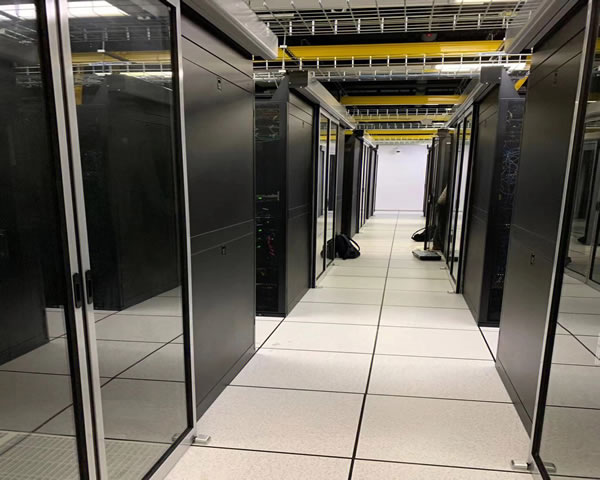
Taiwan Cloud Server Vendor Ranking Security Capability Assessment And Compliance Certification Reference List
Provide enterprises with a reference list of security capability assessment and compliance certification of Taiwanese cloud server vendors, including assessment dimensions, certification comparisons, positioning of various vendors (best/best cost-effective/cheapest) and purchase suggestions to help choose appropriate cloud service solutions. -

How To Choose A Taiwan Server Brand That Suits You
this article details how to choose a taiwanese server brand that suits you, including practical steps and guidance.